Sanrio Launches a Bilingual Global YouTube Channel for Kids
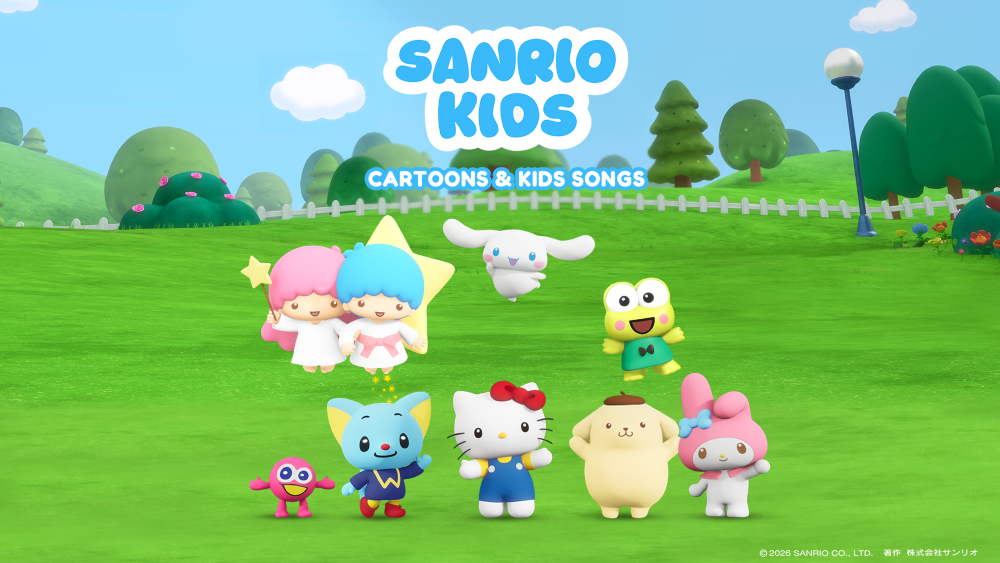
Sanrio has launched a new global YouTube home for short-form 3D animation, with Japanese and English versions built into the same family-oriented channel.
What Was Announced
Sanrio announced on September 15, 2026, that it had launched Sanrio Kids - Cartoons & Kids Songs, a global YouTube channel aimed at preschool-aged children and their families. The company describes the project as a new home for original 3D animated content featuring familiar characters including Hello Kitty, Cinnamoroll, Pompompurin, Kerokerokeroppi, LittleTwinStars, and My Melody.
The launch is organized around three original series. Sing Along With Sanrio Friends is a music-led format built around nursery rhymes and original songs in English and Japanese. Let’s Go, Sanrio Friends! uses character expressions and movement to explore four simple themes: move, play, learn, and reset. Cinnamoroll’s Best Day is a story series about everyday situations, including making up with friends and feeling nervous about starting school.
Sanrio says episodes are approximately two minutes long. The company also says viewers can switch between Japanese and English within the same animation. The channel’s stated launch date is Tuesday, September 15, and its official destination is youtube.com/@SanrioKids.
Why It Matters
This is more than a new playlist for existing Sanrio fans. It gives one of Japan’s most recognizable character companies a direct, global video channel designed around repeat viewing rather than a single television slot, theatrical release, or licensed upload. That matters because Sanrio’s characters already move across merchandise, games, theme parks, books, and animation; a dedicated channel can connect those parts of the brand through a consistent viewing routine.
The bilingual structure is the most useful detail for international audiences. Sanrio is not merely announcing separate Japanese and English marketing pages. Its release says the same animation can be switched between the two languages. That could make the channel easier for families who use Japanese and English together, while also giving overseas viewers a way to encounter the characters without waiting for a separate localization cycle.
The short running time also shapes the project’s identity. Two-minute episodes are small enough for a quick song or story, but a regular sequence of them could build a recognizable library. Sanrio presents the videos as entertainment that can support conversations about kindness, communication, and everyday feelings. Those educational aims are the company’s stated intention; whether families use the channel that way will depend on the episodes themselves and the cadence of future uploads.
Context for International Fans
The practical starting point is the official YouTube channel rather than a regional television service. Sanrio calls it a global channel and lists English and Japanese as its supported languages. That makes the launch immediately relevant to viewers outside Japan, including fans who know the characters through games, collectibles, theme parks, or earlier animated projects.
There are still important limits to what has been confirmed. Sanrio’s announcement does not provide a country-by-country availability table, a fixed upload timetable, a total episode count, or a separate schedule for translated captions. It also does not say whether every future video will appear in both languages at the same time. YouTube access and recommendations can vary by country, so “global” should be read as the intended reach of the channel, not a guarantee that every feature will be identical in every territory.
For families watching from overseas, the language switch is the clearest feature to test first. A viewer may be able to use the same short story in English and Japanese, making the channel potentially useful for casual listening as well as character-based entertainment. Because the videos are on demand, a normal time-zone conversion is not necessary unless Sanrio later announces scheduled premieres or live events.
What Happens Next
The next meaningful checkpoint is the channel’s actual publishing pattern. Fans should check whether the three announced series rotate on a predictable schedule, whether the first uploads establish a regular release day, and whether each video exposes the promised language options. The channel will also show how broadly Sanrio plans to use its character catalog: the launch release names several characters, but it does not yet announce a complete roster or future guest appearances.
Sanrio may expand the channel with additional stories, songs, or learning-oriented formats if the project develops, but that is not yet confirmed. For now, the verified news is the launch itself, the three named series, the approximately two-minute format, and the Japanese-English viewing option. Those details make Sanrio Kids a small but clear example of a Japanese character company building a direct international animation outlet around its own official platform.
Information was checked on September 16, 2026 at 9:19 PM JST.
Sources
- Sanrio English news release — launch date, channel purpose, characters, three series, episode length, and bilingual playback details.
- Sanrio downloadable press release PDF — the company’s primary release with the channel overview and supported languages.
- Official Sanrio Kids YouTube channel — the announced destination for the original videos.


Comments
Post a Comment